
 Letters spacing
 Line height
 Default
 Big
Big More big
 Default
 Black & White
Building Wealth Families powering economies and markets

srchThumbnail:/en/Images/honouring-families-shaping-prosperity-200x200_tcm41-592822.webp
Families as the invisible architecture of economies
Families are often called the foundation of society. That phrase sounds familiar, yet it barely reflects the scale of their economic influence. Families shape how income is earned and spent, how wealth is saved and invested, and how financial decisions carry across generations. These everyday choices, repeated millions of times, quietly support economic stability and long-term market growth.
Recognising this role adds depth to how markets are understood. Economic cycles do not move only on policy decisions or earnings reports. They also reflect confidence at household level, decisions about education, housing, healthcare and future security.
How family behaviour supports economic momentum
Across the world, household spending remains the largest contributor to economic activity. When families feel secure about jobs, income and long-term prospects, spending becomes more confident. That confidence flows into businesses, employment and investment. When uncertainty rises, families pull back and growth slows. This pattern is consistent across regions and income levels. It is also why consumer confidence often signals turning points in economic cycles. Families do not analyse gross domestic product figures, but their collective behaviour shapes them.
Exhibit 1: Households and Non‑Profit Institutions Serving Households (NPISHs) have always contributed significantly to the global Gross Domestic Product (GDP)
Households and NPISHs final consumption expenditure (% of GDP)
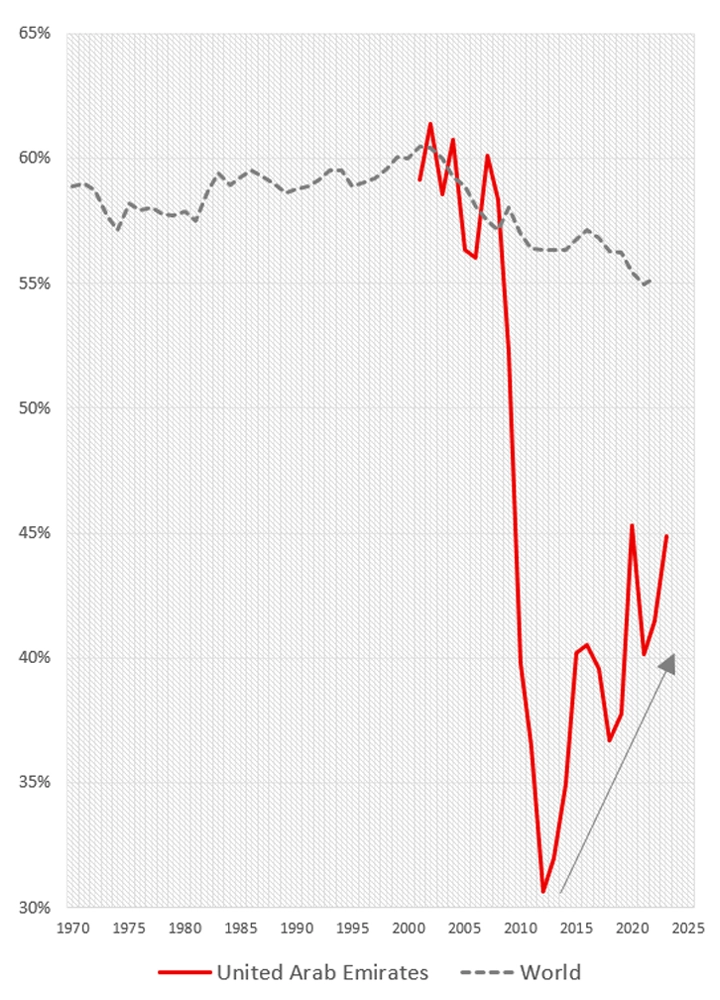
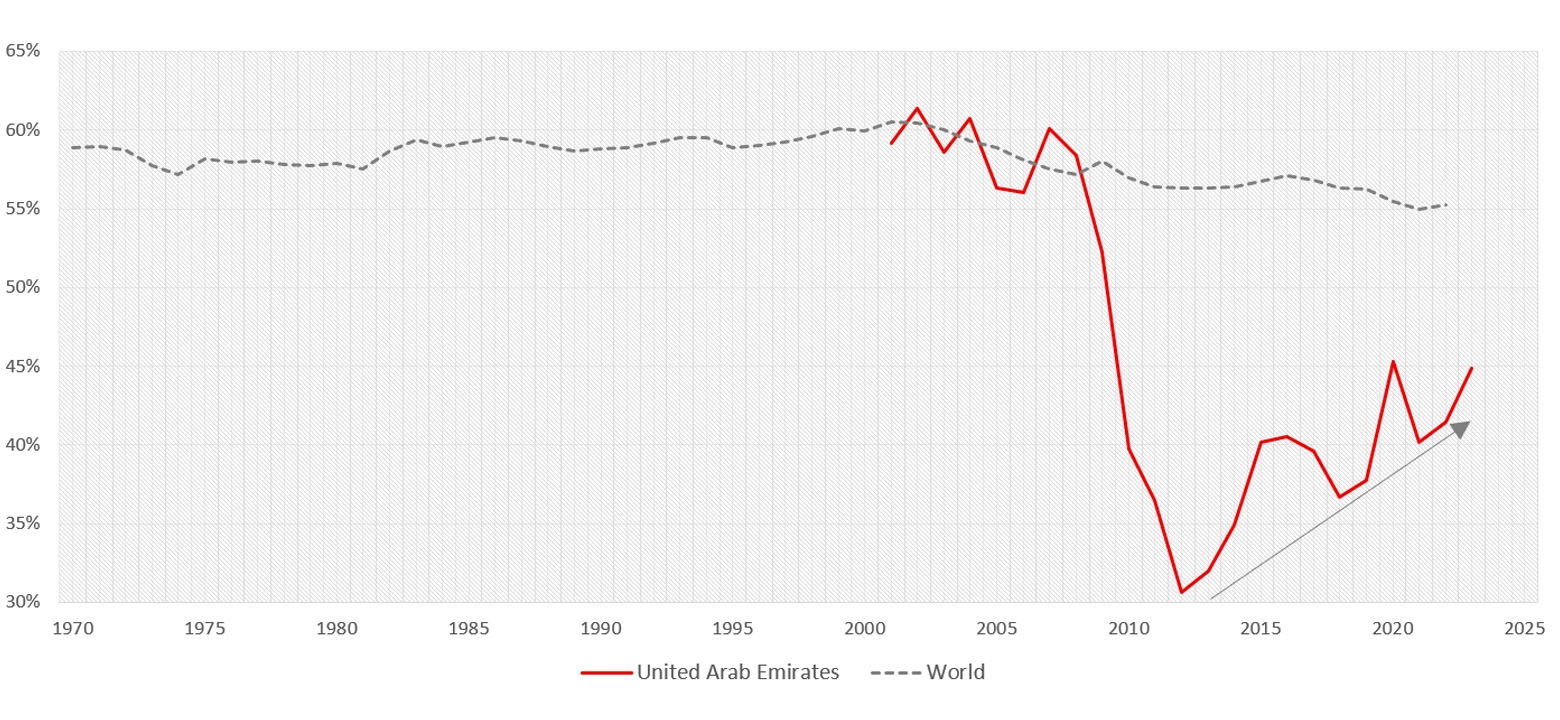
In the United Arab Emirates (UAE), following the global financial crisis of 2008 to 2009, other parts of the economy grew much faster than households did, especially government spending, investment, and hydrocarbons – causing the “share” of households/NPISHs to shrink even if their absolute consumption did not collapse.
Stability in markets starts at home
Financial markets react quickly to interest rates, inflation data and corporate results. Beneath those signals sits a steadier force, household decision-making. Regular saving, mortgage repayments, pension contributions and education funding create predictable financial flows that support banks and capital markets over time. Families also influence labour participation and productivity. Investment in education, skills and wellbeing feeds straight into human capital, innovation and long-term earnings growth. Strong household balance sheets not only protect families, but also stability to financial systems as a whole.
Intergenerational thinking shapes long-term capital
Affluent investors often focus on long-term outcomes, but true long-range thinking usually begins within families. Planning for children, supporting ageing parents or transferring wealth encourages decisions that stretch across decades rather than market cycles. This outlook naturally aligns with sound investment principles. It promotes patience, diversification and disciplined risk management. Instead of chasing short-term returns, intergenerational thinking favours resilience and continuity. Markets benefit from this type of capital because it tends to dampen volatility rather than amplify it.
Family resilience in changing economic conditions
Recent years have shown how closely economic resilience is tied to household preparedness. Families with emergency savings, diversified income and clear financial plans navigate economic pressure more effectively. Inflation, market corrections and changing employment conditions hit less sharply when households have flexibility.
For investors, this highlights why long-term opportunities often sit in sectors supporting everyday family needs. Education, healthcare, housing, infrastructure and essential services reflect ongoing demand rather than passing trends. These areas grow not because of speculation, but because they serve enduring priorities.
What this perspective means for affluent investors
Viewing families as economic engines changes how investment decisions are framed. It encourages a shift away from short-term market noise and toward structural forces driven by real behaviour.
This way of thinking supports:
- Investing with longer horizons tied to demographic and social trends
- Prioritising capital preservation alongside growth
- Structuring portfolios to withstand life events as well as market cycles
- Taking a disciplined approach to risk that reflects long-term objectives
Wealth built on these principles tends to endure beyond individual market phases.
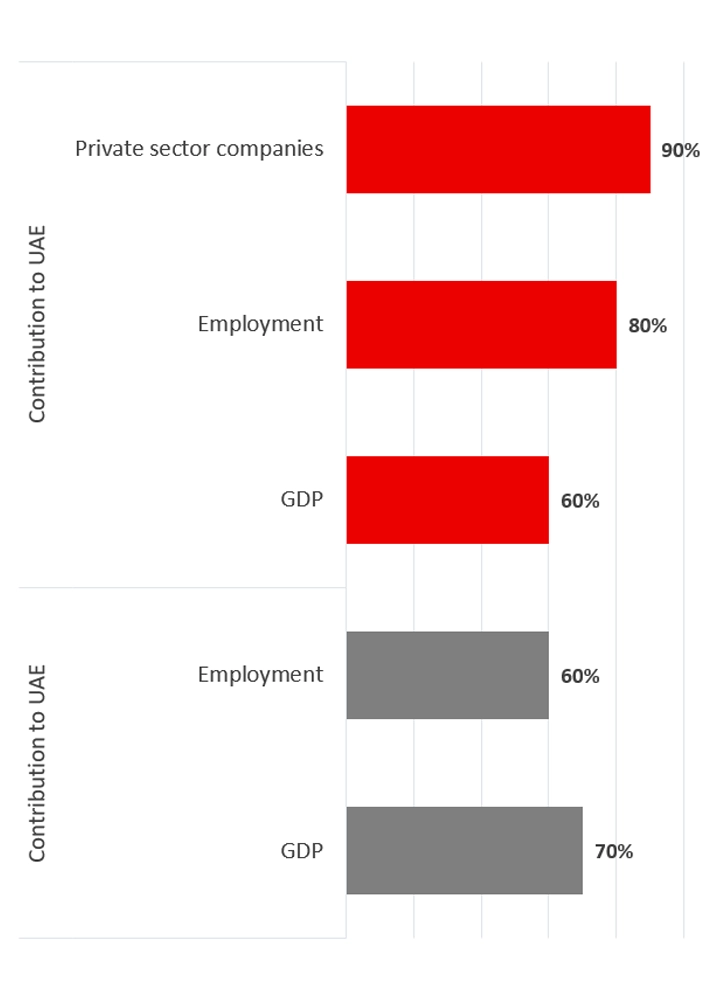
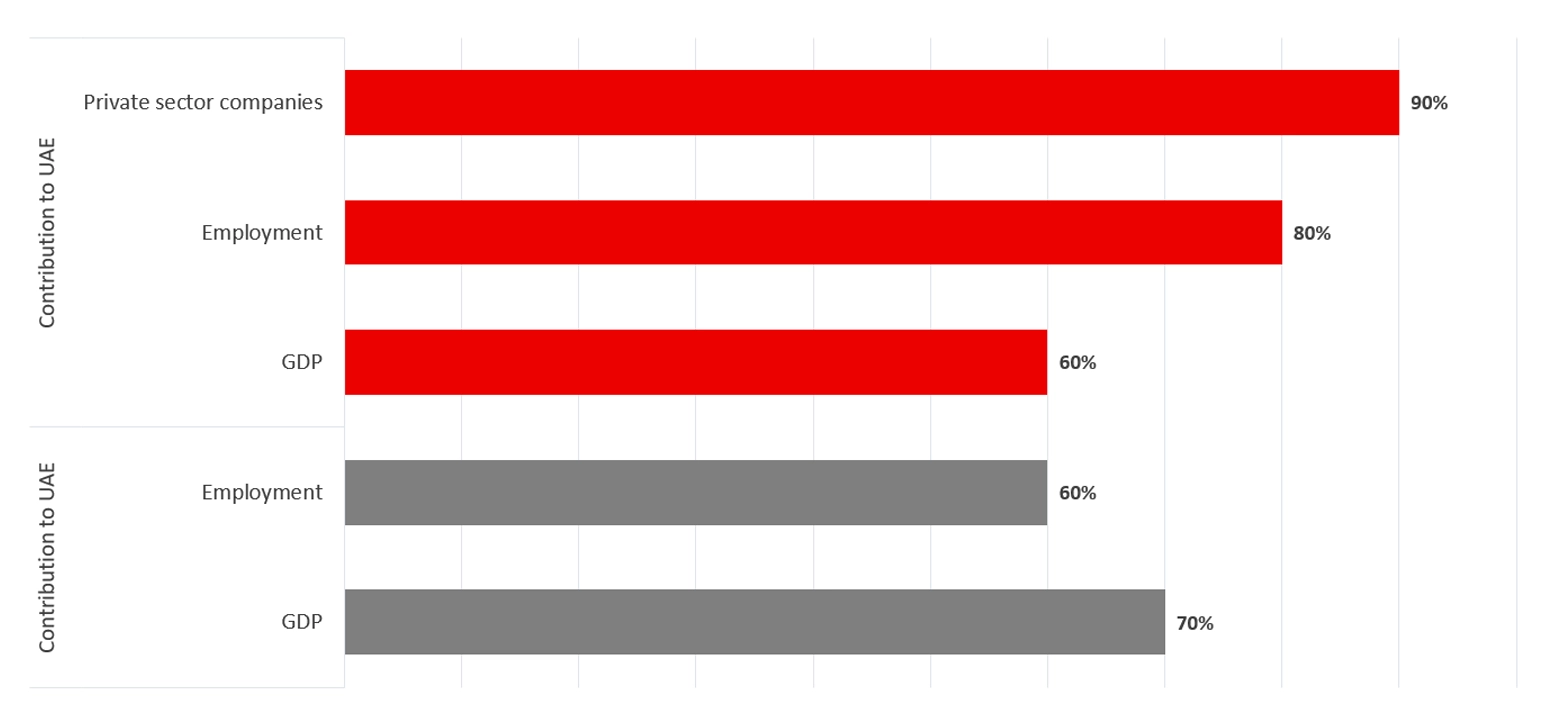
Exhibit 2: Family businesses have a significant impact not only on the global economy but also on the UAE’s economy
Contribution of family businesses
Practical actions worth considering
Affluent investors may find value in revisiting how family priorities connect with financial strategy:
- Clarify long-term goals across generations, not only individual timelines
- Review whether portfolios are aligned with long-term income and stability needs
- Build financial literacy within the family to support informed decisions
- Stress-test plans against life changes, not just market scenarios
These steps reinforce clarity and continuity in financial planning.
A quiet tribute with lasting impact
Families rarely attract attention in market headlines, yet their influence is constant. Every school fee paid, home purchased and savings plan maintained contributes to economic momentum. While markets move in cycles, families provide continuity.
Recognising families as the quiet engines of economies offers a more grounded view of prosperity. For long-term investors, it reinforces the value of patience, responsibility and decisions rooted in real life. Wealth that lasts is usually built the same way economies are, steadily, thoughtfully and over time.
Glossary
For Glossary of terms, abbreviations and explanations on investments, please visit adcb.com/invglossary.
Wealth Management solutions
Discover reliable, innovative Wealth Management solutions. Learn more.
Disclaimer
ADCB’s products and services are subject to Consumer Banking Terms and Conditions. Abu Dhabi Commercial Bank PJSC ("ADCB", "The Bank") is licensed by the Central Bank of the United Arab Emirates under license number 13/2461/2005 to provide banking services to its clients and by the Securities and Commodities Authority to promote investment securities and provide investment related services under license number 601001.
This webpage is for information and illustrative purposes only and does not constitute any form of advice, commitment or engagement on behalf of the Abu Dhabi Commercial Bank and any of its subsidiaries including ADCB Asset Management Limited ("ADCB Group"). It should not be construed as an offer or solicitation to buy or sell any investment products, nor is it to be considered as personalized investment advice. It should be read in conjunction with applicable documents and respective terms and conditions for potential investor to understand the terms and information contained therein. Persons viewing this page are instructed to discuss it with their professional legal, financial and tax advisors before they make any financial commitments and shall be deemed to have made a reasonable assessment of the potential risks and rewards in making such a commitment. ADCB Group does not guarantee any third party service provider and investors invest at their own risk and bear all risks involved in any product purchased. ADCB Group will not hold any responsibility for the outcome of any investment decisions taken. Past performance does not guarantee future results. Investment products are not Bank deposits and are not guaranteed by the ADCB Group, they are subject to investment risks, including possible loss of the principal amount invested. Please refer to ADCB Wealth Services Terms and Conditions and/or to ADCB Asset Management Limited Terms and Conditions.

Did you know?Families at the heart of economic resilience
Behind every economy sits a quiet constant: families. Household spending drives growth, long-term saving supports capital markets and intergenerational planning anchors financial stability. When families feel secure, confidence flows through consumption, investment and entrepreneurship. Understanding this connection helps investors think beyond quarterly data and towards durable, sustainable wealth creation shaped by long-horizon behaviour.
Knowledge quiz Why is the UAE’s “Year of the Family” significant from an economic perspective?
Tags: Nearing Retirement Entrepreneurs Growing Your Savings Growing Your Business Investing for Growth

