
 Letters spacing
 Line height
 Default
 Big
Big More big
 Default
 Black & White
Building Wealth The price of knowledge: unpacking the cost of education

srchThumbnail:/en/Images/wealth-review-content-cost-of-education-200x200_tcm41-557610.webp
For many families, securing a degree from a prestigious university in the United States, Canada, the United Kingdom or Australia remains a long-term aspiration. An international qualification not only strengthens academic credentials but also builds the skills and confidence needed to thrive in a competitive global job market.
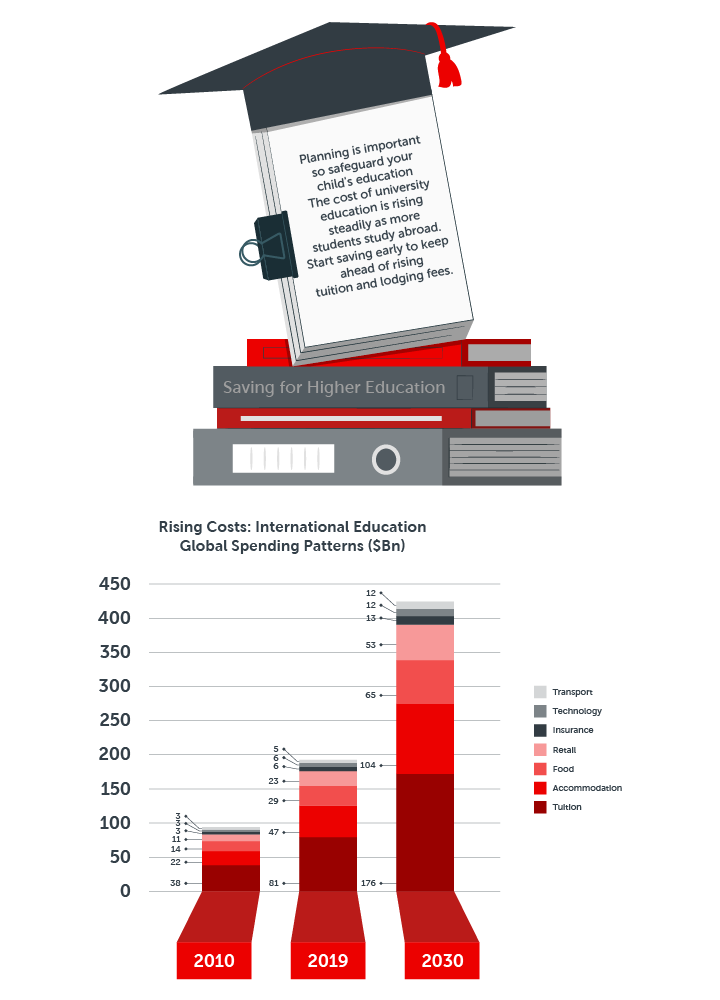
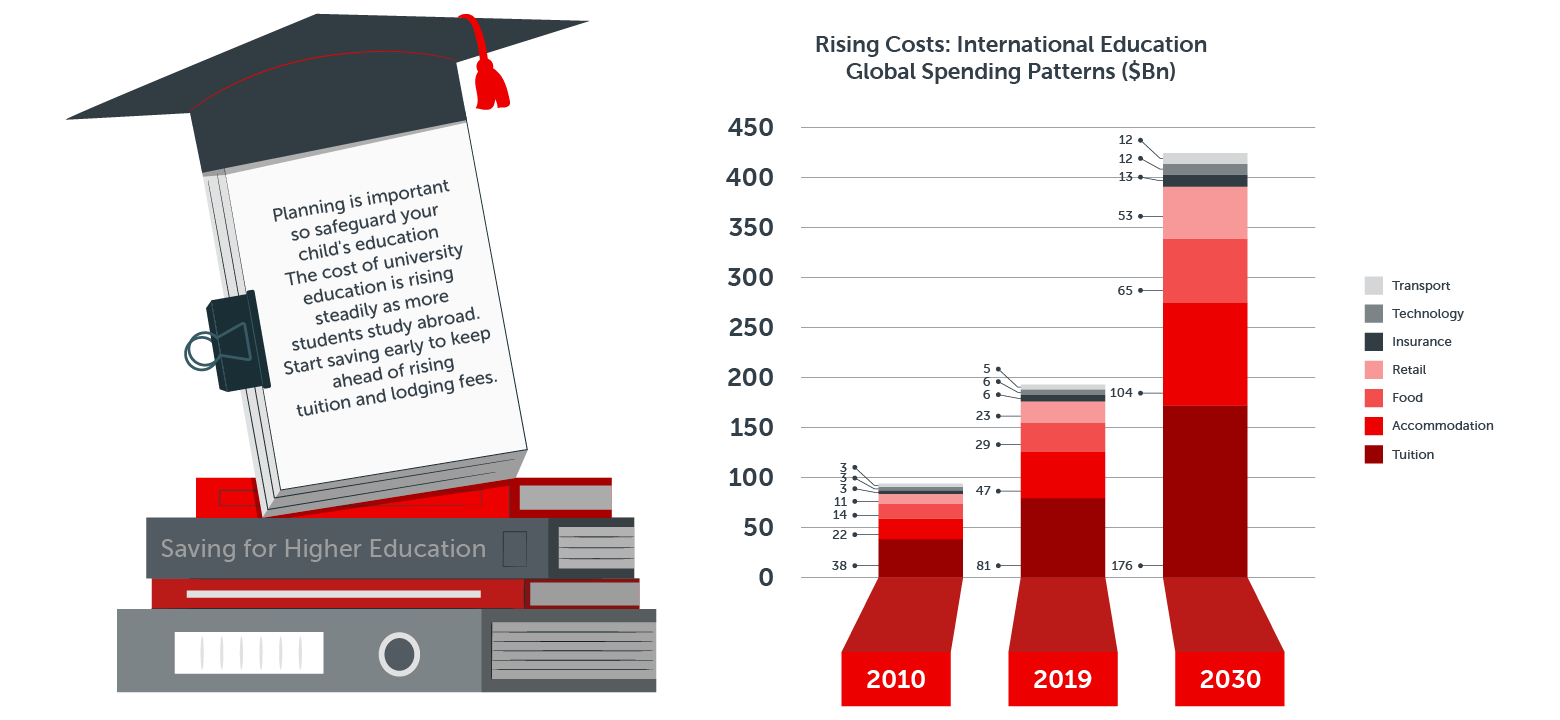
In fact, the number of students pursuing higher education has more than doubled in the past 20 years, surpassing 254 million worldwide—and continues to rise, according to United Nations Educational, Scientific and Cultural Organization (UNESCO). However, a world-class education comes at a significant cost. Below is a snapshot of average tuition fees in popular international study destinations:
| Country | International tuition fees | Local tuition fees | Notes |
|---|---|---|---|
| United States | US$44,000–US$70,000 per year (public universities) | US$11,610 per year (state residents) | Fees vary widely by institution; source: College Board 2024 |
| United Kingdom | Up to £38,000 (approx. US$49,000) per year | £9,250 (approx. US$12,000) per year | International fees are substantially higher than local fees |
| Australia | AU$22,359 per year (public institutions) | AU$8,580 per year (private institutions) | Average costs for undergraduate studies |
| Canada | CA$30,697 per year (bachelor’s degree) | CA$20,876 per year (master’s programmes) | Tuition figures are based on public institutions |
Given these figures, it’s essential for parents in the UAE and wider region to begin planning early. Structured financial planning is key to ensuring children can access top global universities for undergraduate or postgraduate studies.
This highlights how time in the market matters more than timing the market.
Set a monthly savings and investment goal
Starting early—ideally from birth—enables you to invest in growth-oriented instruments. Popular options in the UAE include:
- Education savings plans
- Mutual funds and index funds
- Exchange-traded funds (ETFs)
- Government or corporate bonds
- Equities (stocks)
- Real estate investments
Each asset class carries a different risk-return profile. It’s important to consult a qualified financial advisorto build a diversified, goal-based portfolio aligned with your timeline and risk tolerance.
Stay consistent and disciplined
The earlier you start, the less you need to invest each month to reach your target. You can gradually increase contributions with salary increments, bonuses, or additional income streams such as rental income.
Set up a systematic investment plan (SIP)
SIPs involve investing a fixed amount at regular intervals in selected mutual funds or index funds. This strategy benefits from dollar-cost averaging, reducing exposure to market volatility over time.
Click here to learn more about SIPs.
Explore scholarships and alternative funding options
Many international universities offer scholarships, grants, and merit-based aid. Education loans may also be considered—though they should be assessed carefully due to interest costs.
World-class education, closer to home
International universities in the UAE now offer globally recognised degrees and career pathways, without the high costs associated with overseas study.
Institutions like New York University Abu Dhabi, Sorbonne University Abu Dhabi, and University of Birmingham Dubai offer programmes identical to their main campuses, delivered by expert faculty and backed by strong industry connections.
From a financial standpoint, studying locally eliminates:
- International relocation and living expenses
- Student visa fees
- Long-haul travel costs
Students also benefit from regional career opportunities, with easier access to employers across the Middle East, Asia, and Europe.
To learn more on how to save for higher education, click here.
Glossary
For Glossary of terms, abbreviations and explanations on investments, please visit adcb.com/invglossary.
Wealth Management solutions
Discover reliable, innovative Wealth Management solutions. Learn more
Disclaimer
ADCB’s products and services are subject to Consumer Banking Terms and Conditions. Abu Dhabi Commercial Bank PJSC ("ADCB", "The Bank") is licensed by the Central Bank of the United Arab Emirates under license number 13/2461/2005 to provide banking services to its clients, and by the Securities and Commodities Authority to promote investment securities and provide investment related services under license number 601001.
This webpage is for information and illustrative purposes only and does not constitute any form of advice, commitment or engagement on behalf of the Abu Dhabi Commercial Bank and any of its subsidiaries including ADCB Asset Management Limited ("ADCB Group"). It should not be construed as an offer or solicitation to buy or sell any investment products, nor is it to be considered as personalized investment advice. It should be read in conjunction with applicable documents and respective terms and conditions for potential investor to understand the terms and information contained therein. Persons receiving this email are instructed to discuss it with their professional legal, financial and tax advisors before they make any financial commitments and shall be deemed to have made a reasonable assessment of the potential risks and rewards in making such a commitment. ADCB Group does not guarantee any third party service provider, and investors invest at their own risk and bear all risks involved in any product purchased. ADCB Group will not hold any responsibility for the outcome of any investment decisions taken. Past performance does not guarantee future results. Investment products are not Bank deposits and are not guaranteed by the ADCB Group, they are subject to investment risks, including possible loss of the principal amount invested. Please refer to ADCB Wealth Services Terms and Conditions and/or to ADCB Asset Management Limited Terms and Conditions.

Did you know?Planning early makes education affordable
Knowledge quiz What is a smart way to invest for education?
Tags: Nearing Retirement Entrepreneurs Growing Your Savings Growing Your Business Investing for Growth

