
 Letters spacing
 Line height
 Default
 Big
 More big
 Default
 Black & White

Building Wealth Understanding investment risks

srchThumbnail:/en/Images/low-high-risk-investments-200x200_tcm41-601207.webp
How risk shapes investment outcomes
Long-term wealth building is not simply about pursuing higher returns. It requires a clear understanding of risk, informed decision-making and a disciplined approach to managing opportunities and challenges as markets evolve. Investors who understand both risk and return are better positioned to navigate changing market conditions, protect their capital and work towards their financial objectives.
Every investment carries some degree of risk. Whether investing in shares, bonds, real estate, exchange-traded funds or other financial assets, there is always a possibility that outcomes may differ from expectations. Understanding investment risk is a fundamental part of successful investing, helping investors make more informed decisions and avoid choices that may not align with their financial goals. In simple terms, investment risk refers to the uncertainty surrounding an investment and the potential for financial loss or underperformance.

What investment risk really means
Investment risk is often associated with losing money, but it can take several forms. For some investors, risk means a decline in portfolio value. For others, it may mean earning less than expected or falling short of long-term financial goals. Risk can also refer to the possibility of an asset permanently losing value or delivering weaker-than-expected performance.
Understanding these different perspectives is important because risk is not the same for everyone. A young professional investing for retirement may be comfortable accepting temporary fluctuations in pursuit of long-term growth. An individual approaching retirement may place greater importance on preserving capital and maintaining portfolio stability.
The key is recognising that investment decisions should reflect personal circumstances, financial commitments, investment horizons and future objectives.
Why higher returns usually come with higher risks
One of the most fundamental principles in investing is the relationship between risk and reward. Investors generally expect higher returns when taking on higher levels of risk. Conversely, investments with lower risk often offer more modest returns.
For example, assets with greater growth potential may experience larger price fluctuations and a higher chance of underperformance during market downturns. Meanwhile, lower-risk investments may provide more predictable outcomes but less opportunity for significant capital growth. This does not mean investors should automatically seek the highest-returning opportunities. Instead, they should focus on finding an appropriate balance between growth objectives and their ability to tolerate risk.
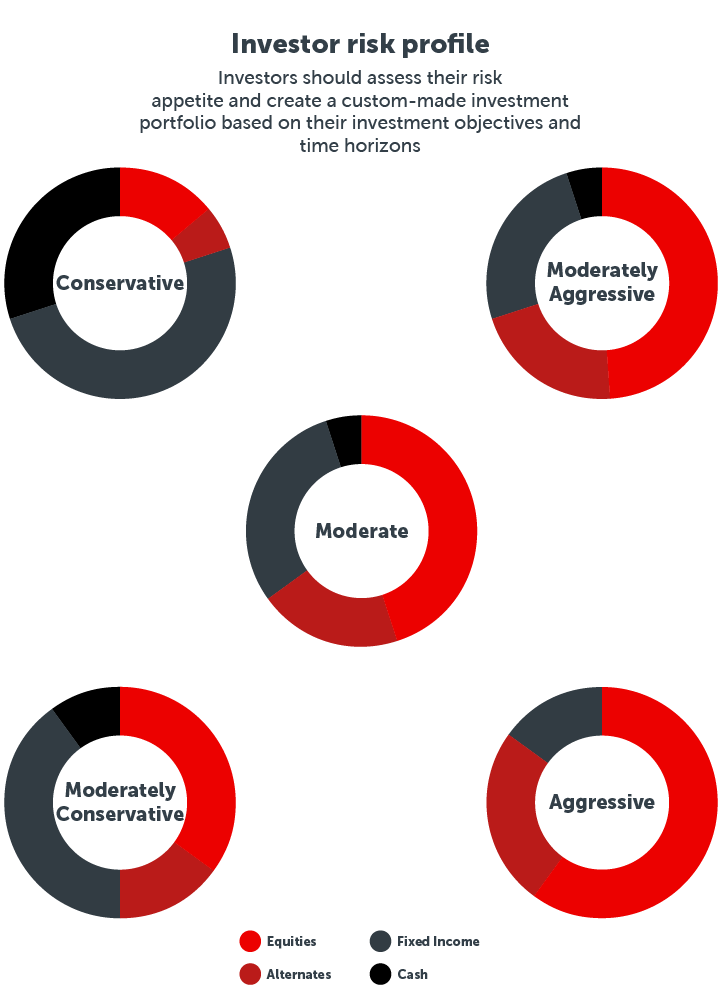
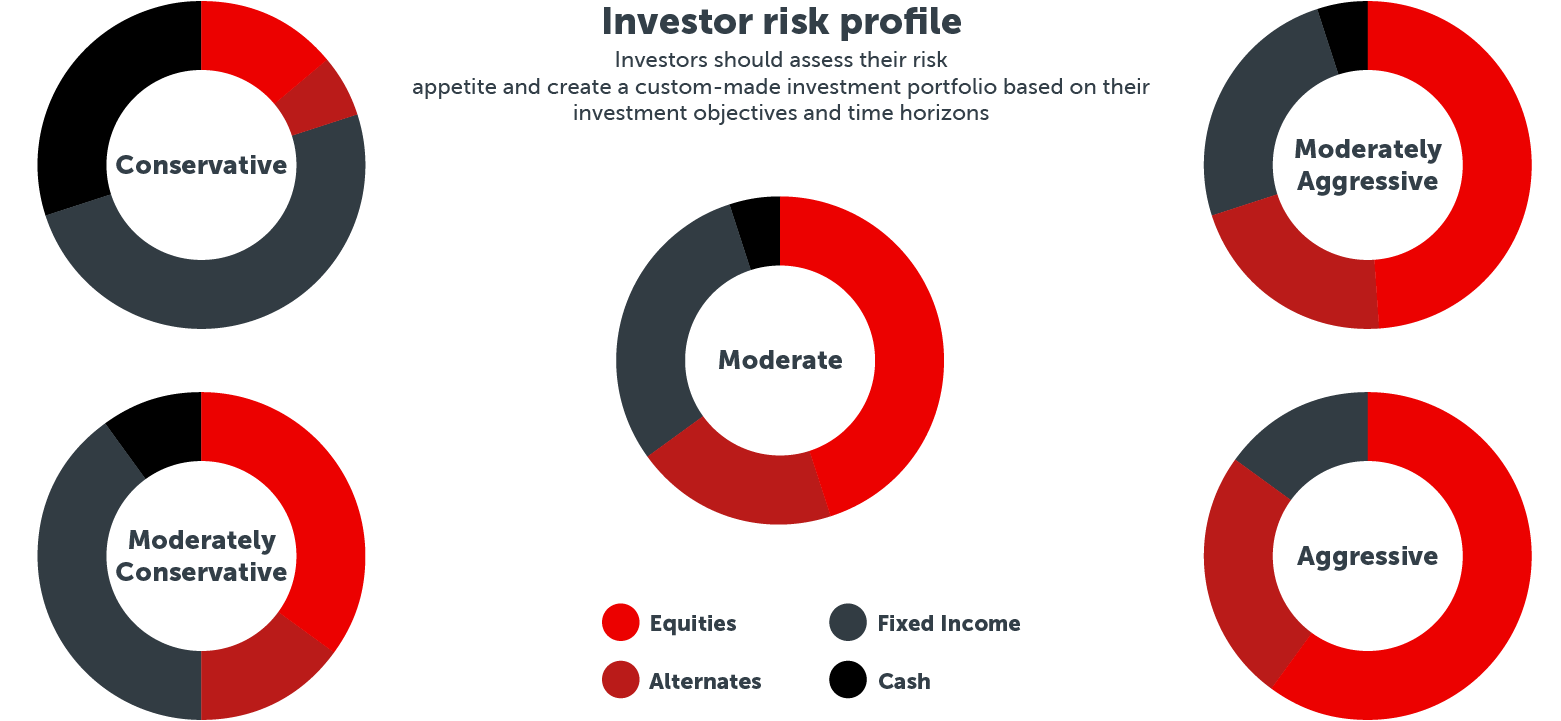
Understanding the difference between volatility and risk
Many people assume that volatility and risk are the same, but they are different concepts. Volatility refers to how much an investment's value rises or falls over a period of time. While volatility is easy to measure and often used as an indicator, it does not necessarily represent the likelihood of permanent financial loss. Volatility should not automatically be considered a direct measure of risk because temporary price movements may not result in lasting losses.
For long-term investors, short-term market fluctuations may simply be part of the investment journey. The greater concern is whether an investment suffers a permanent decline in value or consistently fails to meet its intended objectives. Understanding this distinction can help investors remain focused during periods of market uncertainty and avoid making emotional decisions based solely on temporary market movements.

Low-risk and high-risk investments
Low-risk investments are generally designed to prioritise capital preservation and stability. They aim to reduce the likelihood of substantial losses, although they may also provide lower returns over time. The reference document notes that lower risk often results in lower potential gains. These types of investments may appeal to individuals seeking predictable outcomes, those nearing important financial milestones or investors with a lower tolerance for uncertainty.
High-risk investments, on the other hand, carry a greater possibility of loss, underperformance or significant fluctuations in value. While they may offer substantial return potential, outcomes can be less predictable. The reference document highlights that high-risk investments may generate strong returns when conditions are favourable, but they may also experience substantial losses.
Neither approach is inherently better. The most suitable choice depends on personal goals, financial capacity and individual comfort with uncertainty.
Aligning investments with your risk tolerance
Successful investing often begins with understanding personal risk tolerance. Risk-averse investors generally prioritise preserving capital and favour steady, predictable growth. They are typically more comfortable with conservative investments and may prefer stability over potentially higher returns.
Risk-tolerant investors are generally more willing to accept fluctuations and short-term losses in exchange for greater long-term growth opportunities. They recognise that higher returns often require accepting a higher degree of uncertainty.
Determining risk tolerance involves considering several factors:
- Investment objectives
- Time horizon
- Income stability
- Existing financial commitments
- Emergency savings
- Emotional comfort during market declines
Understanding these factors can help create a portfolio that aligns with both financial goals and personal preferences.
How diversification helps manage risk
Diversification remains one of the most effective risk-management strategies available to investors. Rather than concentrating investments in a single asset, sector or region, diversification spreads exposure across different types of investments. This approach helps reduce the impact of poor performance in any one area and may help create a more balanced investment experience.
Diversification involves spreading investments across multiple asset classes to help mitigate risk and volatility. It may also reduce the severity of portfolio fluctuations, although it cannot eliminate losses or guarantee profits.
A diversified portfolio may include a combination of:
- Equities
- Fixed-income investments
- Real estate assets
- Cash and cash equivalents
- International market exposure
Regular portfolio reviews and rebalancing can help ensure that asset allocations continue to align with changing market conditions and personal financial goals.
Taking a disciplined approach to investment decisions
Managing investment risk is not about avoiding risk altogether. It is about understanding, measuring and managing it effectively. Successful investors typically establish clear financial goals, maintain realistic expectations and adopt a long-term perspective. They avoid reacting impulsively to market headlines and instead focus on strategies that reflect their risk tolerance and financial objectives.
Professional guidance can also help investors better understand complex investment choices and develop appropriate strategies. Aligning investment decisions with personal risk tolerance and financial goals is essential. Investment success is often built on patience, discipline and informed decision-making. By understanding risk, recognising personal preferences and maintaining a diversified portfolio, investors can make decisions that support sustainable long-term wealth creation.
Related Resource
The battle between capital protection & appreciation, please click here.
Glossary
For Glossary of terms, abbreviations and explanations on investments, please visit adcb.com/invglossary.
Wealth Management solutions
Discover reliable, innovative Wealth Management solutions. Learn more.
Disclaimer
ADCB’s products and services are subject to Consumer Banking Terms and Conditions. Abu Dhabi Commercial Bank PJSC ("ADCB", "The Bank") is licensed by the Central Bank of the United Arab Emirates under license number 13/2461/2005 to provide banking services to its clients, and by the Capital Market Authority to promote investment securities and provide investment related services under license number 601001.
This webpage is for information and illustrative purposes only and does not constitute any form of advice, commitment or engagement on behalf of the Abu Dhabi Commercial Bank and any of its subsidiaries including the "ADCB Group". It should not be construed as an offer or solicitation to buy or sell any investment products, nor is it to be considered as personalised investment advice. It should be read in conjunction with applicable documents and respective terms and conditions for potential investor to understand the terms and information contained therein.
Persons viewing this page are instructed to discuss it with their professional legal, financial and tax advisors before they make any financial commitments and shall be deemed to have made a reasonable assessment of the potential risks and rewards in making such a commitment. ADCB Group does not guarantee any third party service provider, and investors invest at their own risk and bear all risks involved in any product purchased. ADCB Group will not hold any responsibility for the outcome of any investment decisions taken. Past performance does not guarantee future results. Investment products are not Bank deposits and are not guaranteed by the ADCB Group, they are subject to investment risks, including possible loss of the principal amount invested. Please refer to ADCB Wealth Services Terms and Conditions.

Did you know?Risk and reward move together
Knowledge quiz What does investment risk primarily refer to?
Tags: Working Professional Nearing Retirement New to UAE Financial Protection Retirement Planning Getting Financially Aware Investing For Growth

