
 Letters spacing
 Line height
 Default
 Big
Big More big
 Default
 Black & White
Building Wealth Humanoids and the productivity shift
srchThumbnail:/en/Images/redefining-work-with-robots-200x200_tcm41-595358.webp
From thinking machines to working robots
Artificial Intelligence (AI) is no longer confined to software. A new phase is emerging where intelligence becomes physical and embedded in machines that can sense and move and act in real environments. This is known as embodied intelligence. Unlike traditional systems that process data in isolation, embodied intelligence allows machines to interact directly with the world. These systems combine perception, reasoning, and motion and enable robots to learn through experience and respond in real time.
This shift transforms AI from a digital tool into a workforce capability. It bridges the gap between thinking and doing. For investors, that is a powerful change.

Why humanoid robots are gaining traction
Humanoid robots sit at the centre of this transformation. Designed to resemble human form and movement, they can operate in environments built for people. They can walk through factories, lift objects in warehouses, and assist in service roles without needing major infrastructure changes. This adaptability sets them apart from traditional industrial machines. Instead of being confined to repetitive tasks, humanoids are evolving into general-purpose workers capable of handling multiple roles.
Current deployments remain simple, such as lifting and sorting and transporting goods. Yet rapid advances in AI models and robotics are expanding their capabilities at pace.
The productivity frontier: why this matters for the economy
Humanoid robots are often described as the next wave of automation. Some analysts refer to them as Automation 3.0, reflecting their ability to move beyond factories and into broader sectors.
The economic impact could be significant:
- Productivity gains
Robots can perform repetitive or physically demanding tasks efficiently - Labour shortage solutions
Ageing populations and shifting job preferences are creating gaps in the workforce - Cost efficiency
Automation can reduce operational expenses over time - Expanded output
More work can be done without proportional increases in human labour
Research indicates humanoids could influence economic growth, labour markets and even inflation dynamics by lowering production costs and increasing supply.
This is why embodied intelligence is seen as a new productivity frontier not just a technological upgrade but a structural shift in how economies operate.
Exhibit 01: Demographic support is fading as dependency ratios rise
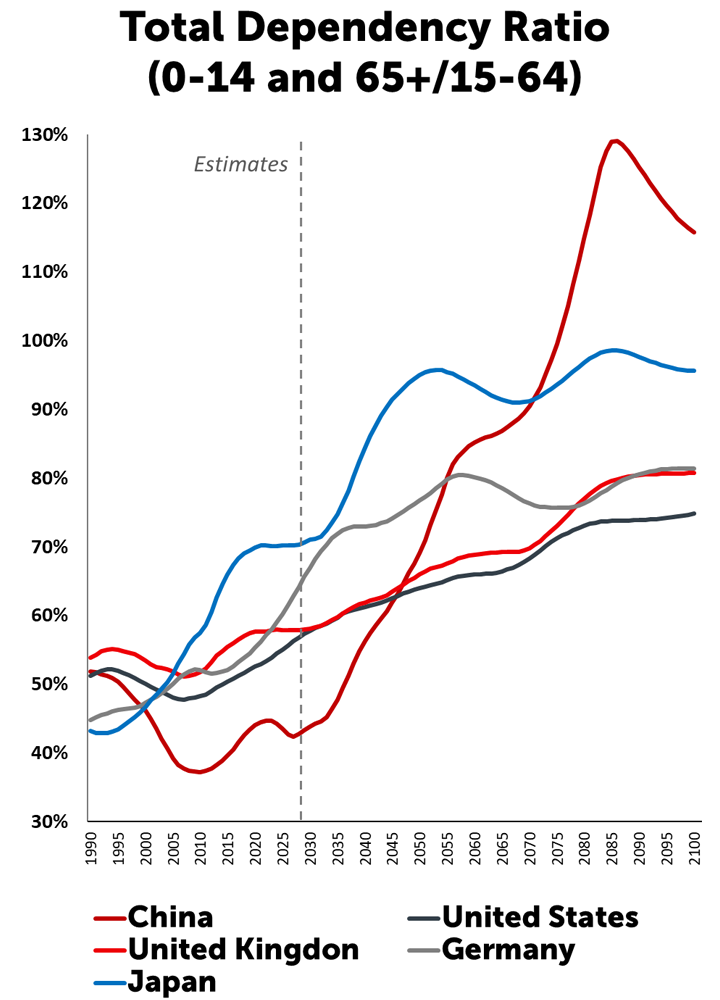
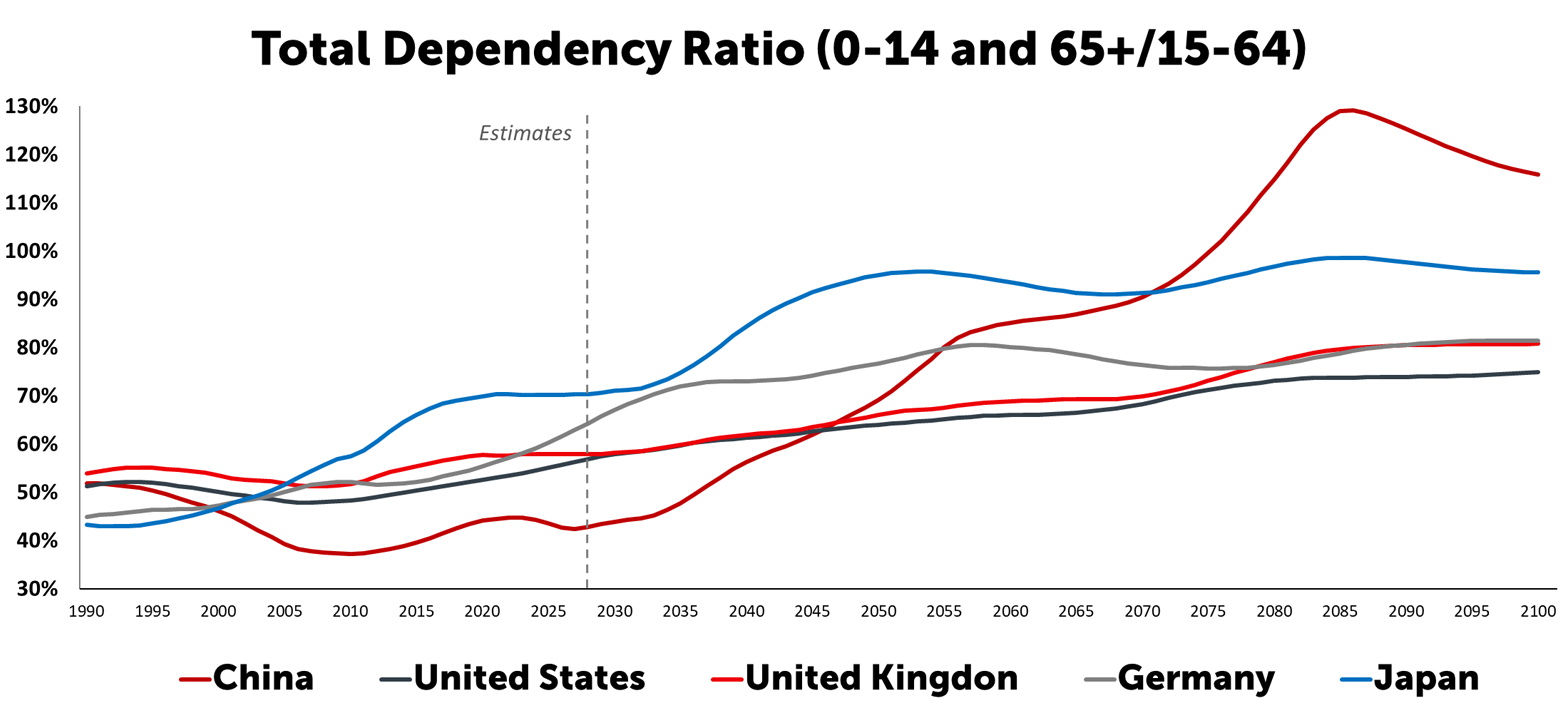
Sources: United Nations (UN) Department of Economic and Social Affairs, Population Division (2024). World Population Prospects: The 2024 Revision, custom data acquired via website, and ADCB Asset Management
Where humanoids are making an impact
Adoption remains early-stage, but real-world use cases are already taking shape across industries, with deployment expanding from controlled settings to broader applications.
| Where humanoids operate | What they are doing today |
| Manufacturing and logistics | Robots are already operating in controlled environments where tasks are predictable. These include assembly lines, warehousing, and material handling. |
| Service sectors | As capabilities improve humanoids are expected to enter customer-facing roles particularly in areas such as retail and hospitality and healthcare support. |
| Specialised applications | Robots are also being tested in fields like inspection and maintenance and dangerous environments where human safety is a concern. |
Over time the transition from structured settings to more complex environments will define the pace of adoption.
Where value is emerging in humanoids
Interest in humanoid robotics is rising rapidly. Markets that are currently small are expected to expand significantly over the next decade. Estimates suggest the market could grow from a few billion dollars today to around two hundred billion dollars by 2035 reflecting strong demand growth.
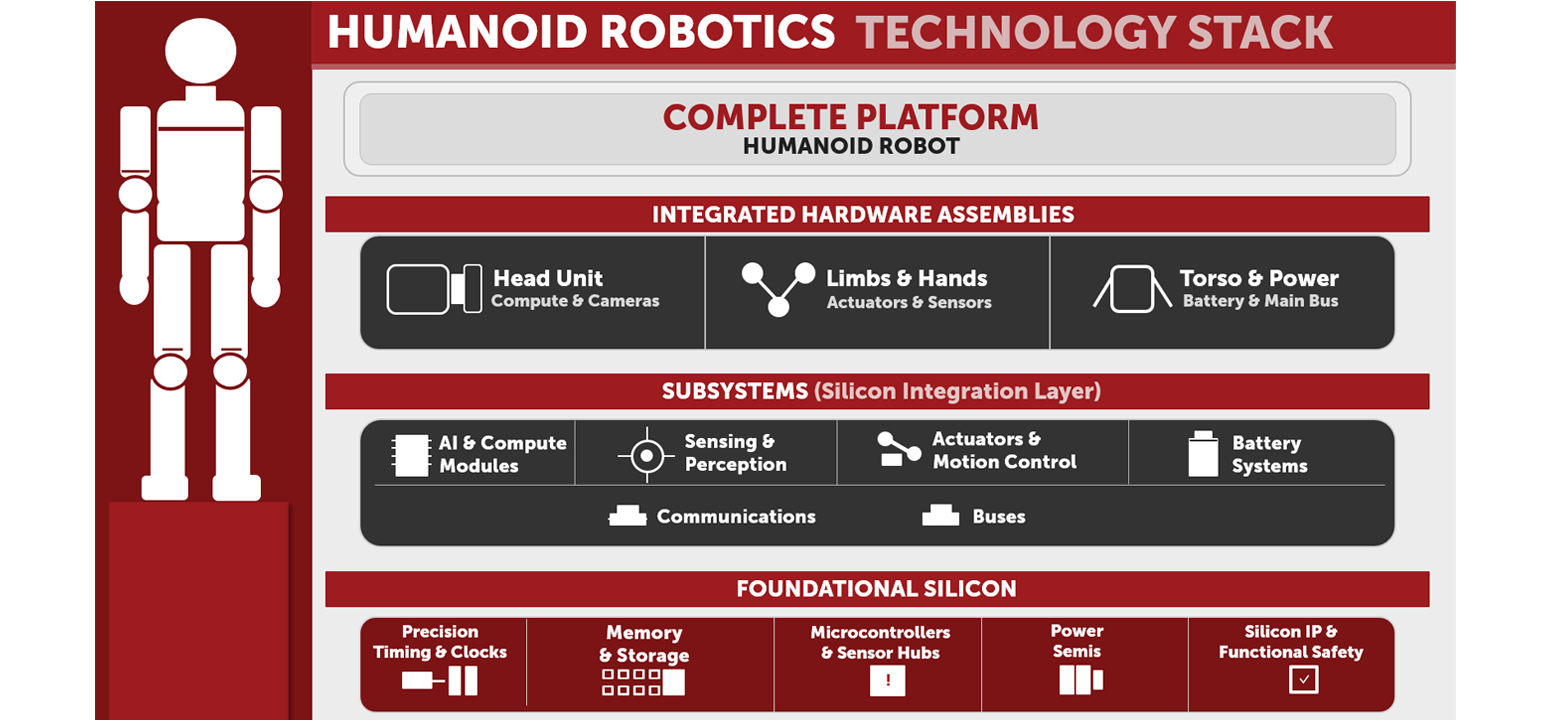
The opportunity for investors goes well beyond robotics manufacturers:
- Hardware and components
Sensors and motion control systems and batteries are critical to robot functionality. - AI and software
Embodied intelligence depends on advanced models that enable perception, reasoning, and learning. - Semiconductors and infrastructure
High-performance computing is essential for training and operating intelligent machines. - Industrial and service adoption
Companies that integrate robotics into operations may benefit from productivity gains.
Some investors are exploring diversified approaches including thematic funds given the early-stage nature of the sector and the limited number of pure-play listed companies today.

Key drivers behind growth
Several forces are converging to accelerate this trend:
- Advances in AI enabling robots to learn and adapt
- Falling hardware costs improving affordability over time
- Labour shortages across critical industries
- Increased investment from both private and public sectors
Large amounts of capital are flowing into embodied intelligence signalling growing confidence in its long-term potential.
Risks and considerations for investors
Despite strong momentum, this remains a developing theme with a range of inherent risks and considerations for investors. From a technological standpoint, robotics continues to face limitations in dexterity, reliability, and safety, particularly when operating in complex, real-world environments. Commercial viability is another key factor, as large-scale deployment will depend on the industry’s ability to achieve cost efficiency while demonstrating clear and measurable returns on investment.
At the same time, regulation and adoption pathways remain uncertain. The evolution of standards, safety frameworks, and broader public acceptance will significantly influence the pace at which robotics solutions are integrated into everyday use. Additionally, the competitive landscape is far from settled, with no clear consensus yet on which companies or regions will emerge as dominant players.
Importantly, the market itself is still in its early stages. Many current implementations remain in pilot phases rather than fully commercialised rollouts, suggesting that timelines for widespread adoption may vary and should be approached with measured expectations.
How to think about this trend as an investor
A disciplined approach can help navigate this emerging space.
- Take a long-term view
This is a structural theme that may unfold over years rather than months. - Diversify exposure
Consider the full value chain, including hardware, software, and industrial adopters. - Focus on enablers
Companies providing key technologies may benefit regardless of which robot makers succeed. - Monitor adoption milestones
Watch for signs of scaling such as repeat commercial orders or cost reductions. - Stay balanced
Growth potential is strong but expectations should be grounded in current realities.
Exhibit 02: Every layer of the humanoid value chain presents opportunities for investors
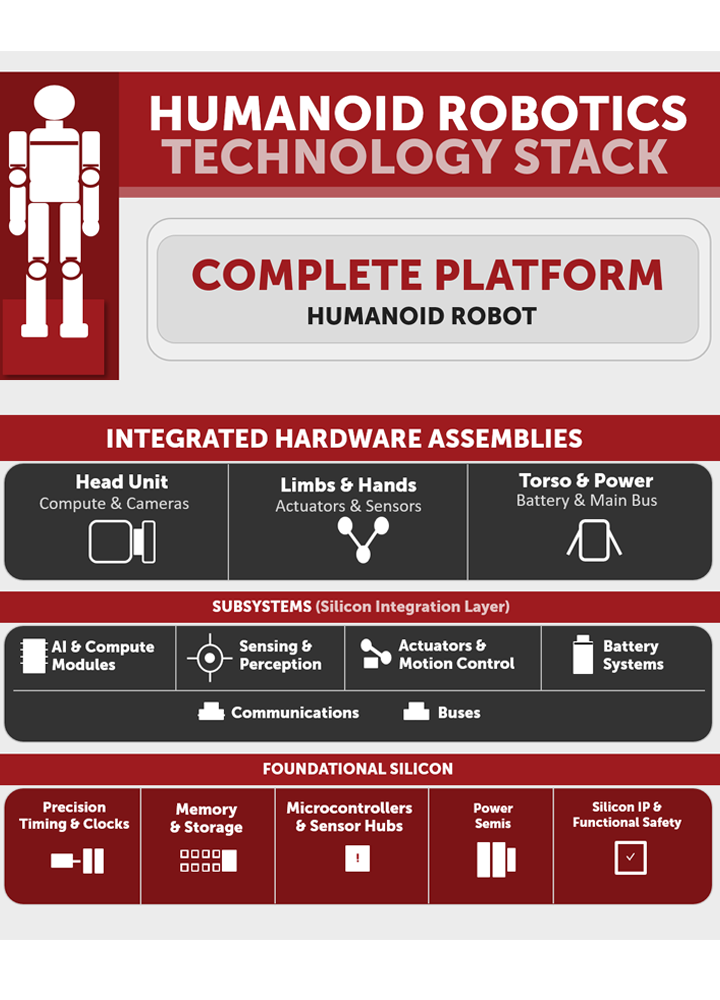
Sources: Asset Management
The long-term impact of embodied intelligence
Embodied intelligence marks a shift from digital intelligence to physical capability. Humanoid robots are not just another innovation. They represent a new way of delivering productivity across economies. The journey is still at an early stage. Many questions remain about timing, adoption, and commercial success. Yet, the direction is becoming clearer. AI is stepping into the real world, and with it comes a new frontier for productivity and growth and investment opportunity.
Glossary
For Glossary of terms, abbreviations and explanations on investments, please visit adcb.com/invglossary.
Wealth Management solutions
Discover reliable, innovative Wealth Management solutions. Learn more.
Disclaimer
ADCB’s products and services are subject to Consumer Banking Terms and Conditions. Abu Dhabi Commercial Bank PJSC ("ADCB", "The Bank") is licensed by the Central Bank of the United Arab Emirates under license number 13/2461/2005 to provide banking services to its clients, and by the Securities and Commodities Authority to promote investment securities and provide investment related services under license number 601001.
This webpage is for information and illustrative purposes only and does not constitute any form of advice, commitment or engagement on behalf of the Abu Dhabi Commercial Bank and any of its subsidiaries including ADCB Asset Management Limited ("ADCB Group"). It should not be construed as an offer or solicitation to buy or sell any investment products, nor is it to be considered as personalized investment advice. It should be read in conjunction with applicable documents and respective terms and conditions for potential investor to understand the terms and information contained therein. Persons viewing this page are instructed to discuss it with their professional legal, financial and tax advisors before they make any financial commitments and shall be deemed to have made a reasonable assessment of the potential risks and rewards in making such a commitment. ADCB Group does not guarantee any third party service provider, and investors invest at their own risk and bear all risks involved in any product purchased. ADCB Group will not hold any responsibility for the outcome of any investment decisions taken. Past performance does not guarantee future results. Investment products are not Bank deposits and are not guaranteed by the ADCB Group, they are subject to investment risks, including possible loss of the principal amount invested. Please refer to ADCB Wealth Services Terms and Conditions and/or to ADCB Asset Management Limited Terms and Conditions.

Did you know?The physical future of artificial intelligence (AI)
Embodied intelligence is pushing AI beyond screens into the real world and enabling machines to learn, adapt, and act like human workers. This shift signals a major productivity leap as robots begin to fill labour shortages, reduce costs, and expand output across sectors. For investors the opportunity lies not only in robotics manufacturers but also in the wider ecosystem powering this transformation.
Knowledge quiz What is a key driver of humanoid adoption?
Tags: Nearing Retirement Entrepreneurs Growing Your Savings Growing Your Business Investing for Growth

