
 Letters spacing
 Line height
 Default
 Big
Big More big
 Default
 Black & White
Managing and Growing Small Businesses Driving entrepreneurial success through smart communication

srchThumbnail:/en/Images/building-influence-effectively-200x200_tcm41-565681.webp
Influencing and persuasion skills in business
Imagine having a secret decoder for human behavior, one that helps you read the room, tailor your message and win hearts and minds in business. In the world of entrepreneurship, that decoder exists, it is called the Dominance, Influence, Steadiness and Compliance (DISC) personality model. In a marketplace where every conversation counts, the ability to influence and persuade is no longer optional, it is a powerful advantage. Whether pitching to investors, leading a team, or connecting with customers, entrepreneurs who understand behavioural styles can unlock deeper trust, smoother collaboration and smarter decision-making.
This article is your gateway to mastering the art of influence through behavioural insight. Get ready to explore how small business owners can turn personality awareness into a practical advantage, one conversation, one connection, one success at a time.
Understanding the DISC personality model
The Dominance, Influence, Steadiness and Compliance (DISC) model is more than a behavioural framework, it is a tactical lens through which entrepreneurs can decode human interaction, enhance team dynamics and personalise customer engagement.
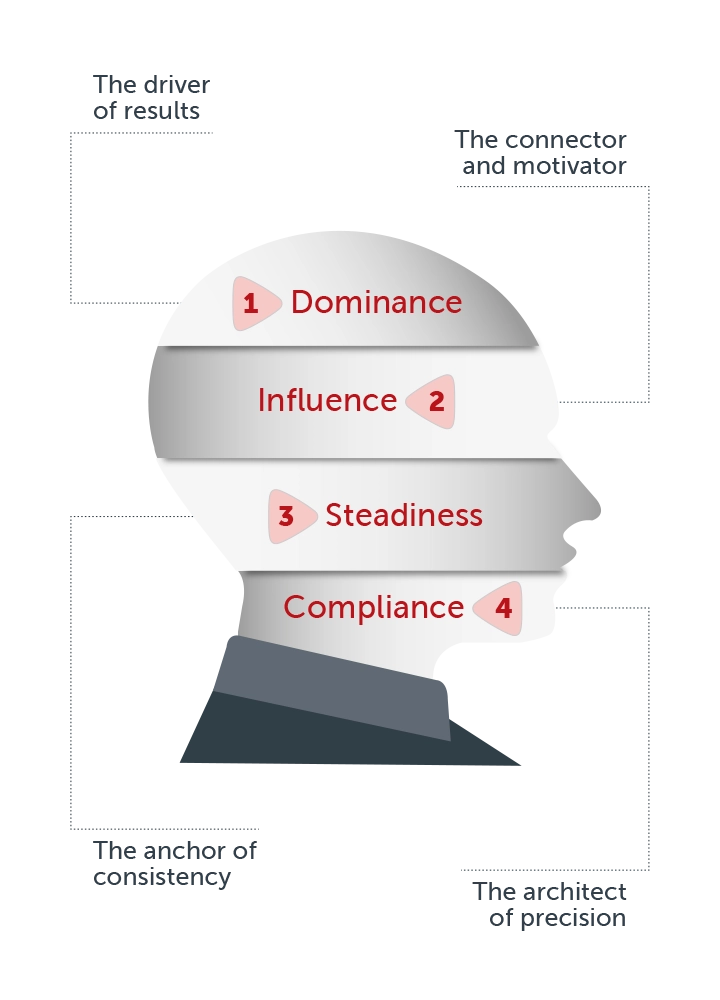
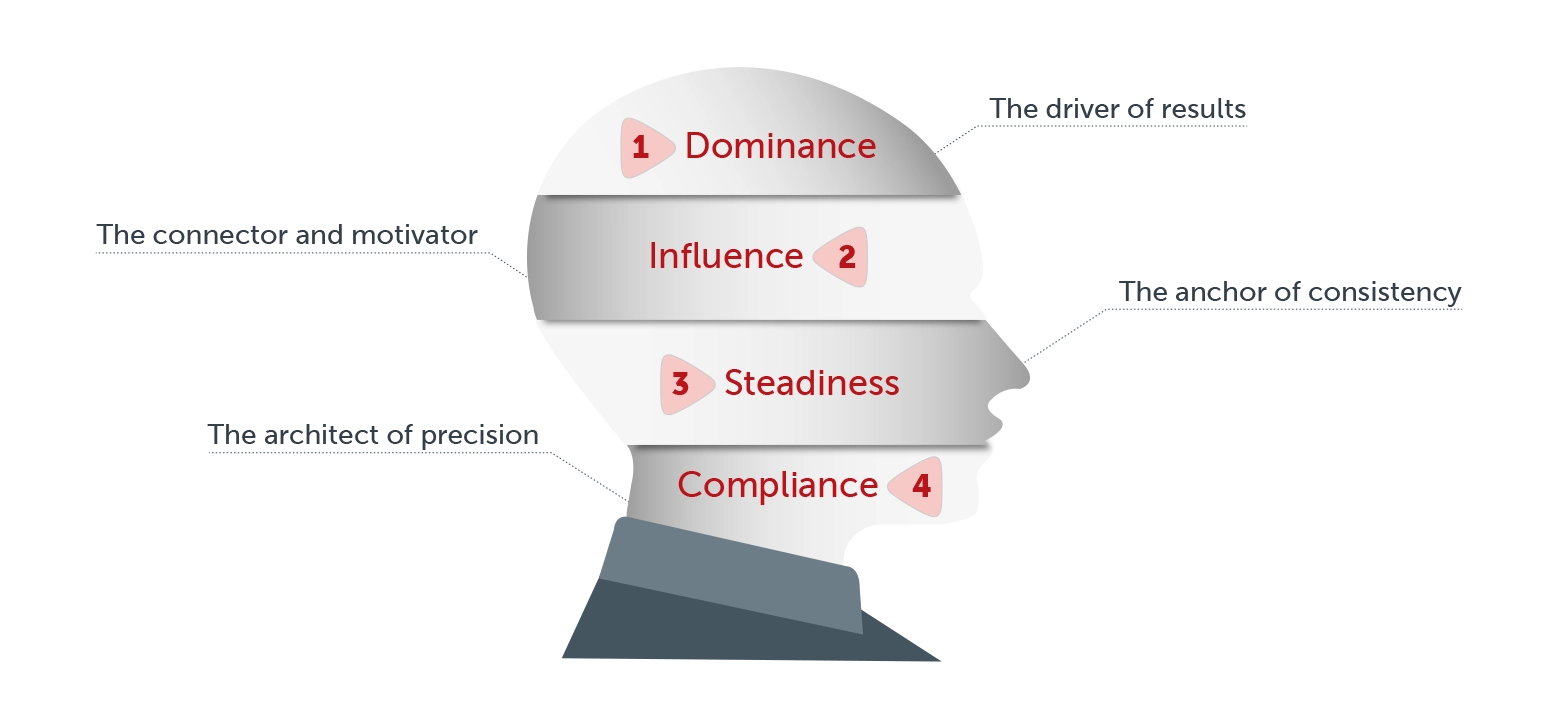
- Dominance: The driver of results
Dominance-style individuals are assertive, goal-oriented and thrive in high-pressure environments. They are natural decision-makers who value efficiency and control.
Example: A Dominance-style entrepreneur might launch a product quickly to beat competitors to market, preferring action over prolonged analysis. When leading a team, they may push for rapid execution, expecting others to keep pace. - Influence: The connector and motivator
Influence-style personalities are enthusiastic, persuasive and socially driven. They excel in environments that require charisma, storytelling and relationship-building.
Example: A small business owner with an Influence profile might shine at networking events, effortlessly attracting partners and clients through charm and optimism. Their marketing campaigns often feature vibrant visuals and emotionally resonant messaging. - Steadiness: The anchor of consistency
Steadiness-style individuals are dependable, calm and loyal. They prefer stability and are excellent at maintaining harmony within teams.
Example: A Steadiness-style entrepreneur may focus on building long-term customer relationships, offering consistent service and personalised follow-ups. In team settings, they often act as mediators, ensuring everyone feels heard and supported. - Compliance: The architect of precision
Compliance-style personalities are analytical, detail-oriented and systematic. They value accuracy, structure and adherence to standards.
Example: A Compliance-style entrepreneur might spend extra time refining a business plan, ensuring every financial projection is backed by data. When designing a product, they prioritise quality control and regulatory compliance.
Explore a comprehensive selection of business account solutions designed to support your unique operational needs and growth goals.
Why influencing and persuasion matter in business
Influencing and persuasion are foundational to leadership, sales and customer engagement. According to behavioural science research, entrepreneurs who master these skills can improve negotiation outcomes, build trust and drive customer loyalty. Persuasion involves understanding the audience’s motivations and presenting value in relatable terms.
Recognising these traits in oneself and others allows entrepreneurs to:
- Adapt communication styles to suit different personalities.
Take this scenario: Being direct with Dominance types, or more relational with Steadiness types. - Build balanced teams by combining strengths.
Pairing an Influence-style marketer for instance, with a Conscientious operation manager. - Improve customer engagement by tailoring messaging to behavioural preferences.
For example, using data-driven content for Conscientious clients, or storytelling for Influence-style audiences.
Discover a smarter approach to commercial borrowing.
Applying behavioural profiles to business scenarios
Understanding DISC profiles is one thing, applying them in real-world business situations is where the real transformation happens. Entrepreneurs who integrate behavioural awareness into their daily operations can unlock smoother collaboration, stronger leadership and more resonant customer engagement.
Let’s explore how this plays out in action:
Scenario 1: Leading a Mixed-Style Team
| Situation | Challenge | Refinement |
|---|---|---|
| A Dominance-style entrepreneur is managing a team composed of Steadiness and Compliance-style employees. The leader is fast-paced, direct and focused on results. However, the team members prefer stability, clarity and time to process information. | The leader’s rapid-fire decisions and blunt communication style are causing stress and disengagement among the team. | By slowing down, providing structured updates and inviting feedback, the entrepreneur creates a more inclusive environment. They begin using phrases like, “Let’s walk through the details together,” or “I value your input on this process.” |

Key takeaway
Adapt leadership style to match team dynamics. Assertiveness must be balanced with empathy to maintain morale and productivity.
Scenario 2: Designing a marketing campaign
| Situation | Challenge | Refinement |
|---|---|---|
| A small business is launching a new service. The marketing team includes an Influence-style creative lead and a Compliance-style analyst. | The creative lead wants bold visuals and emotional storytelling. The analyst insists on including detailed specifications and data. |
Instead of choosing one approach, the team creates a dual-layered campaign:
|
Key takeaway
Blend creativity with credibility. Tailoring content to different behavioural preferences increases reach and resonance.
Scenario 3: Handling a customer complaint
| Situation | Challenge | Refinement |
|---|---|---|
| A Steadiness-style customer contacts a business with a concern about a delayed delivery. The customer values reliability and calm communication. | The customer service representative, who has a Dominance-style personality, responds with a quick, solution-focused message: “We’ve refunded you. Case closed.” | After recognising the mismatch, the representative follows up with a more empathetic message:
|
Key takeaway
Empathy builds loyalty. Matching the customer’s communication style can turn a negative experience into a trust-building moment.
Scenario 4: Pitching to investors
| Situation | Challenge | Refinement |
|---|---|---|
An entrepreneur is pitching to a panel of investors with mixed DISC profiles:
|
A one-dimensional pitch risks losing the attention of at least two-thirds of the panel. | The entrepreneur structures the pitch to include:
|
Key takeaway
A well-rounded pitch speaks to all decision-makers. Understanding behavioural diversity improves persuasion and funding outcomes.
Ethical considerations in persuasion
Persuasion in business must be rooted in integrity. Entrepreneurs and financial advisors should avoid undue influence and focus on transparent, authentic value communication. Ethical persuasion not only fosters trust but also builds long-term relationships and strengthens brand reputation, especially in sectors where values and principles matter deeply.
This is particularly relevant in compliant financing, where ethical standards are foundational. For example, Shari’ah-compliant investing emphasizes fairness, transparency and social responsibility. It prohibits exploitative practices such as excessive uncertainty (gharar) and interest (riba), aligning financial decisions with moral and spiritual values.
By integrating ethical persuasion with compliant financing, businesses can create offerings that resonate deeply with value-driven consumers, build sustainable trust and contribute to a more principled financial ecosystem.
Click here to learn more about Shari’ah compliant investing.
Behavioural fluency is a business advantage
Entrepreneurs are encouraged to explore DISC assessments, invest in communication training and practise adaptive engagement strategies. By aligning business practices with behavioural insights, small businesses can achieve sustainable growth and stronger stakeholder relationships.
Applying DISC profiles is not about labelling people, it is about listening better, leading smarter and connecting deeper. Entrepreneurs who practise behavioural fluency can:
- Reduce internal challenges by aligning leadership with team needs.
- Craft more effective marketing by speaking the customer’s language.
- Navigate conflict with empathy and clarity.
- Build trust across diverse stakeholder groups.

Did you know?Understanding behavioural finance in business

