
 Letters spacing
 Line height
 Default
 Big
Big More big
 Default
 Black & White
Customers in need of extra care Overcoming financial challenges with the 50/30/20 rule

srchThumbnail:/en/Images/overcoming-budget-challenges-200x200_tcm41-589819.webp
Simplify your finances with the 50/30/20 rule
Managing your finances can be challenging, especially when trying to balance essential needs, personal wants and future savings. The 50/30/20 rule is a simple yet effective budgeting method that helps you allocate your income wisely, making financial planning more manageable and less stressful. This approach divides your income into three categories: needs, wants and savings, offering a clear path to financial stability without the complexity of traditional budgeting strategies.
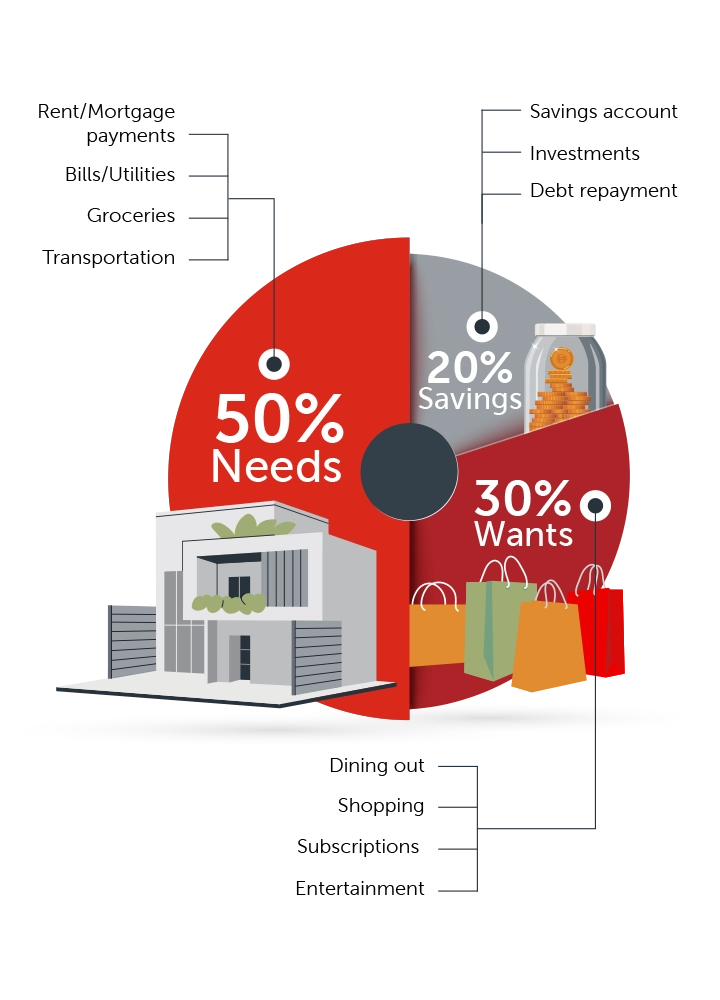
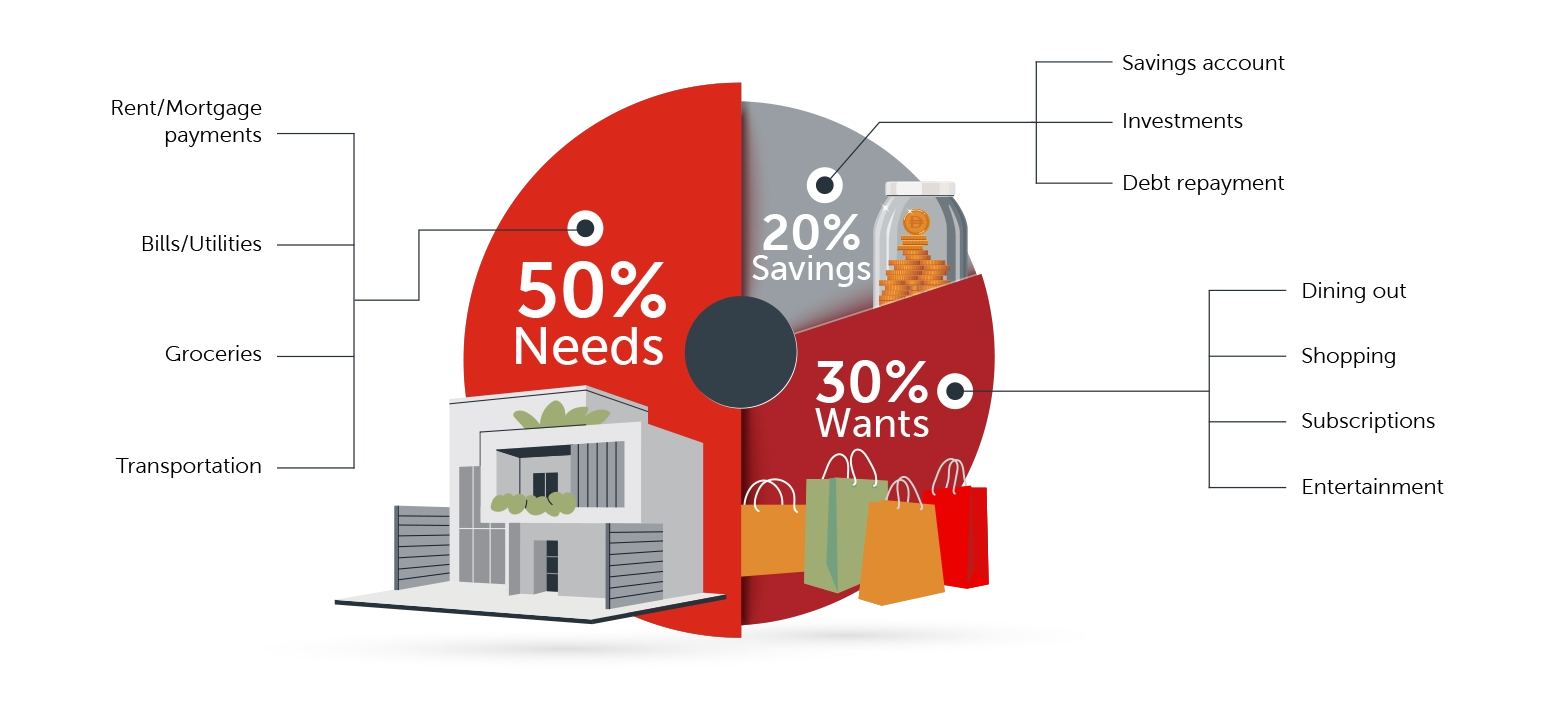
How the 50/30/20 rule works?
- 50% - Needs: This portion of your income should cover essential expenses such as rent or mortgage, utilities, groceries and transportation. These are expenditures that you cannot avoid and are necessary for basic living.
- 30% - Wants: This part of your budget is allocated for things you enjoy but do not necessarily need. It includes costs like dining out, shopping, subscriptions and entertainment. It is important to control spending in this category to avoid financial strain.
- 20% - Savings and debt repayment: The final segment is for building your savings and paying off debts. This includes contributions to your savings account, investments, and making extra payments on any debts you have, such as credit cards or loans.
Implementing the rule
- Track your spending: Start by tracking where your money goes each month. You can use budgeting apps or simple spreadsheets.
- Categorize expenses: Sort your spending into needs, wants and savings/debt repayment based on the 50/30/20 rule.
- Adjust as needed: If you find one category is consistently exceeding its limit, make adjustments to stay aligned with the rule.
- Review regularly: Make it a habit to revisit your budget monthly to ensure you are on track with your financial goals.
Example: If your monthly income is AED 10,000, according to the 50/30/20 rule:
- AED 5,000 should go towards needs like rent and bills.
- AED 3,000 can be spent on wants such as leisure activities.
- AED 2,000 should be directed towards savings or paying down debt.
The 50/30/20 rule offers a straightforward way to manage your finances, ensuring you meet essential needs, enjoy life, and save for the future. By following this method, you can reduce financial stress and work towards achieving long-term stability and security.
Tags: Working Professional Restructuring Finances Reducing Debt Improving Credit Getting Financially Aware Knowing Your Financial Options

