
 Letters spacing
 Line height
 Default
 Big
Big More big
 Default
 Black & White
Protect your family financially How allowances can teach children early about money

srchThumbnail:/en/Images/how-much-pocket-money-should-your-children-get-thumbnails-image-200x200_tcm41-545518.webp
How much pocket money should your children get?
Pocket money is a great way to teach kids about budgeting, saving, and spending. The amount should match your child's age, needs, and your family's financial situation. Setting the right amount helps build their financial skills and teaches them to manage money responsibly.
How much pocket money should kids get based on age?
- Ages 5-8: AED 20/month to introduce the concept of money.
- Ages 9-12: AED 50/month to teach money management basics.
- Teens: AED 100/month to handle bigger expenses and save for goals.
Benefits of pocket money:
- Educational value: Teaches budgeting, saving, and spending.
- Financial discipline: Helps kids understand the value of money.
- Decision-making: Encourages informed financial choices.
Tips for Parents:
- Set goals: Encourage kids to set savings goals for a sense of achievement.
- Earn through chores: Link pocket money to chores to teach the value of earning.
- Match savings: Consider matching their savings to motivate them to save more.
Pocket money isn’t just for spending, it’s a tool to teach financial literacy. By adjusting the amount based on their age, parents can guide kids toward financial independence.
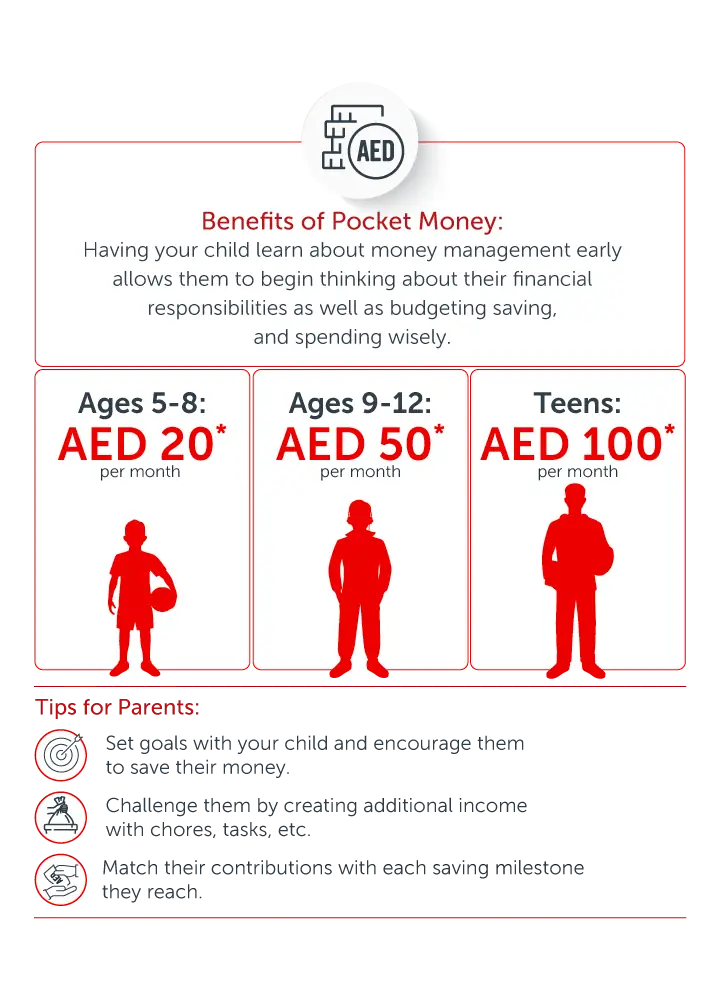
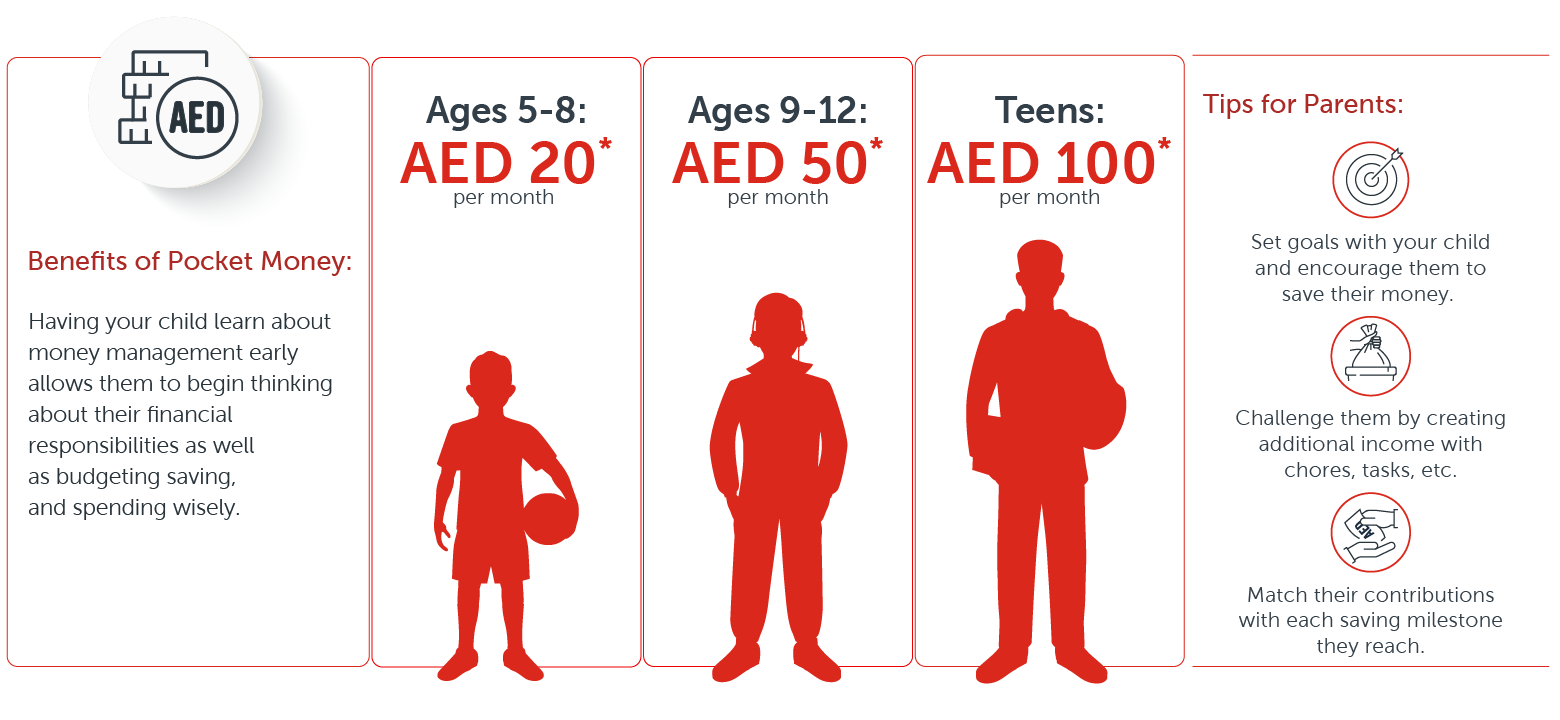
* Please note that the figures represented above are for illustrative purposes only. Parents should assess their financial situation first and assign an allowance to their children based on what they can afford from their budget.
Tags: Family Finances Infographics Guidance & advice Budgeting Pocket money for children Pocket money amount Benefits of pocket money

