
 Letters spacing
 Line height
 Default
 Big
Big More big
 Default
 Black & White
Protect your family financially Guide to saving with sinking funds approach

srchThumbnail:/en/Images/sinking-fund-300x375_tcm41-547506.webp
A sinking fund is a strategic financial tool designed to help you plan and save for future expenses efficiently. It’s particularly useful for families or individuals aiming to strengthen their financial health. By setting aside money regularly throughout the year, you can reduce the need to rely on credit or loans when large, anticipated expenses arise.
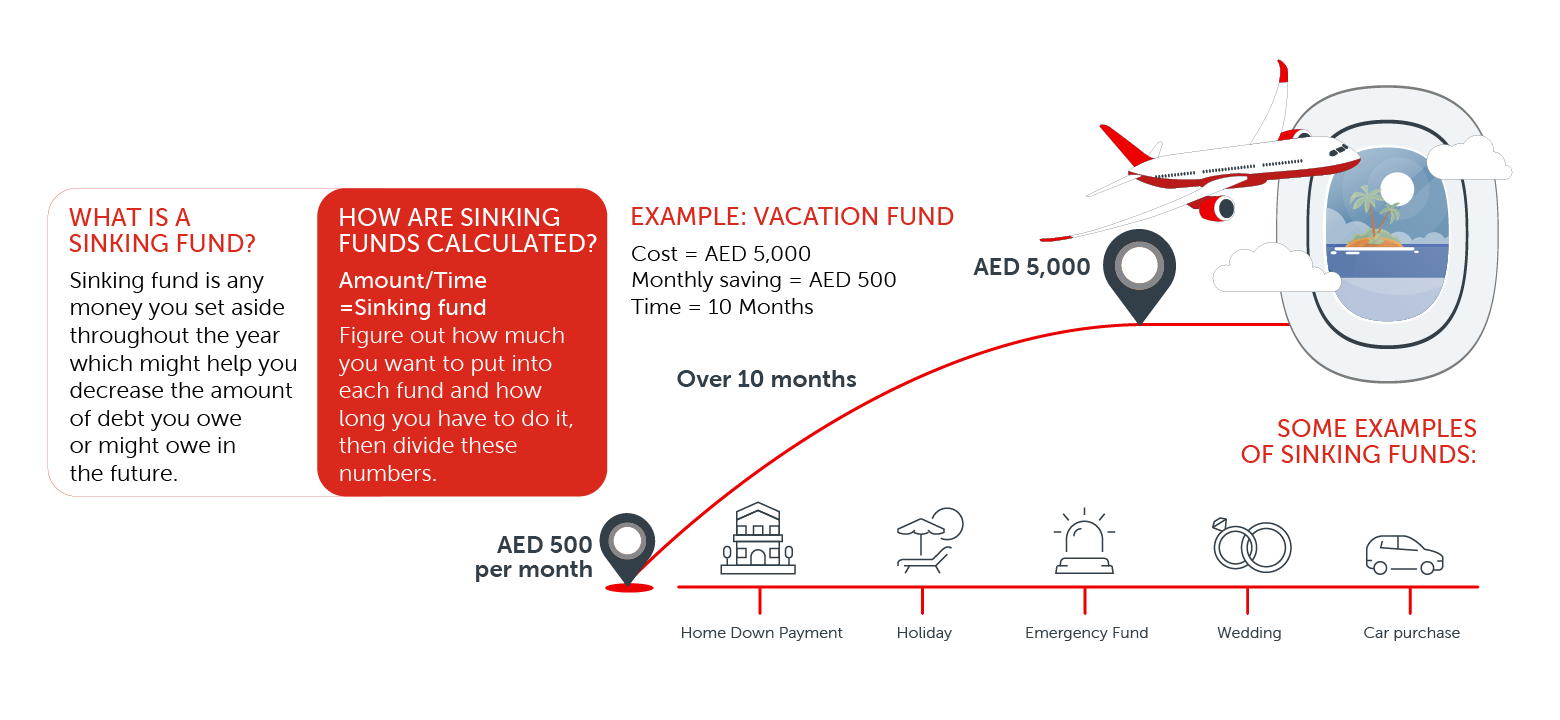
At its core, a sinking fund is a reserve that you build over time for specific future costs. This proactive approach ensures that when a major expense occurs, whether planned or unexpected, you have the necessary funds ready, helping you avoid debt.
How to calculate a sinking fund?
The calculation is straightforward. Simply determine the total amount needed for a particular expense and divide it by the number of months available to save. This gives you the monthly amount required to reach your goal.
Formula:
Sinking fund = total amount needed/number of months
For example, if you need AED 5,000 for a vacation in 10 months, you would need to save AED 500 per month: AED 5,000 ÷ 10 months = AED 500 per month.
Steps to set up a sinking fund
- Define your goals – identify what you are saving for, whether it’s a vacation, home improvement, or any other significant expense.
- Estimate the total cost – calculate the full amount required to meet each goal.
- Set a time frame – decide by when you need to have the funds saved.
- Calculate and save – use the formula to determine how much you need to save each month and consistently set aside that amount.
Benefits of sinking funds
- Debt-free spending – by saving in advance, you eliminate or reduce the need for loans or credit when the expense arises.
- Financial peace of mind – having dedicated funds for specific expenses gives you confidence and security in your financial planning.
- Improved budgeting – sinking funds help break down large, infrequent expenses into manageable, predictable monthly contributions, making budgeting easier.
Common examples of sinking funds
- Home down payment – gradually save for a new home.
- Vacations – set aside funds for future travel without financial stress.
- Emergency fund – be prepared for unexpected costs, such as medical bills or car repairs.
- Wedding – saving incrementally for wedding expenses.
- Car purchase – plan ahead by reserving funds for a new vehicle.
By integrating sinking funds into your financial strategy, you can effectively manage your budget and be better prepared for both anticipated and unforeseen costs. This simple but effective method ensures that you’re financially equipped to handle any major expense with ease.
Tags: Family Finances Infographics Budgeting Saving Understanding sinking funds Examples of sinking funds Calculating sinking funds

