
 Letters spacing
 Line height
 Default
 Big
Big More big
 Default
 Black & White
Starting Out Tips for saving and spending securely on holiday
srchThumbnail:/en/Images/holiday-fund-200x200_tcm41-553629.webp
A well-planned holiday is much more than a break from routine. It is an opportunity to create lasting memories, experience new cultures and recharge your mind and body. While the anticipation of travel brings joy and excitement, a lack of financial preparation can quickly turn that excitement into stress. From overlooked expenses to difficulties accessing funds abroad, financial missteps have the potential to disrupt even the most thoughtfully arranged trips.
Managing your finances effectively is crucial at every stage. This means not only budgeting and saving before you travel, but also making informed decisions about spending and accessing your money securely while you are away. With proactive financial planning, you can avoid common pitfalls, ensures you have the resources you need and allows you to focus on enjoying your journey.
Planning your holiday budget
Successful travel begins with a well-constructed budget that balances both your aspirations and your financial reality. Taking the time to plan your holiday finances not only helps you avoid unpleasant surprises, but also empowers you to make the most of your experience.
- Start with thorough research
Investigate your chosen destination to understand the typical costs for accommodation, meals, local transportation, sightseeing and entertainment. Prices can vary widely depending on location, season and travel style, so look for up-to-date information from travel guides, blogs and official tourism websites. - Create a comprehensive expense list
Go beyond the basics and include every possible cost in your budget. This should cover flights, train or bus tickets, visa fees, travel insurance, daily spending money, tips and any planned activities or excursions. Remember to factor in costs for vaccinations, travel gear and connectivity costs such as local SIM cards or roaming charges. - Set a realistic savings target
Once you have calculated all anticipated expenses, consider adding a contingency buffer around 10–20%. This can help cover unexpected costs like medical emergencies, last-minute changes or unplanned opportunities that arise during your trip.
Practical tip
Leverage technology to stay organised. Budgeting apps and spreadsheets can help you track expenses, monitor your progress and adjust your plans as needed. Many tools allow you to set savings goals, track spending in real time and even convert currencies, making it easier to manage your finances before and during your holiday.

*This is a hypothetical example.
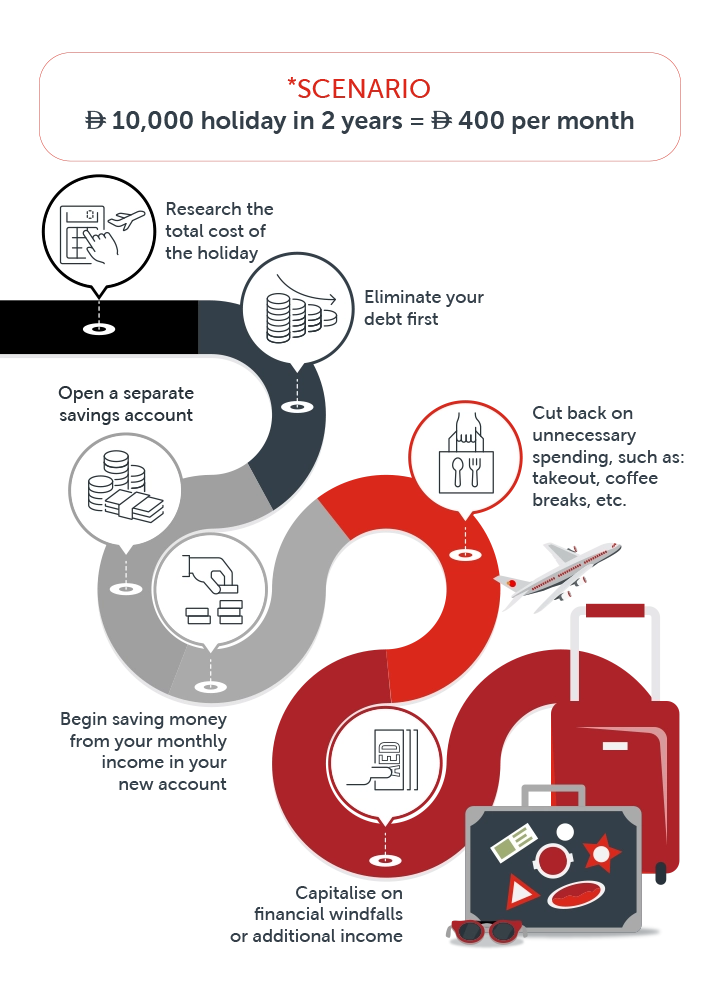
How to build your holiday fund?
Creating a dedicated holiday fund is a key step towards stress-free travel. By following a disciplined approach, you can ensure your trip is fully funded and avoid financial strain during your holiday.
- Pay off high-interest debt
Before you start saving for your holiday, focus on clearing any outstanding debts, especially those with high interest rates such as credit cards and personal loans. Paying off these balances help you avoid unnecessary interest costs and frees up more funds for savings. - Open a dedicated savings account
Set up a separate savings account specifically for your holiday fund. Keeping these savings apart from your everyday accounts help prevent accidental spending and makes it easier to track your progress. Many banks offer goal-based savings accounts that allow you to set targets and monitor your growth. - Automate your savings
Consistency is key. Schedule automatic monthly transfers from your main account to your holiday fund. Even modest amounts, when saved regularly, can add up significantly over time. Automation removes the temptation to skip a month and keeps your savings plan on track. - Reduce non-essential spending
Take a close look at your regular expenses and identify areas where you can cut back. This might include dining out less often, cancelling unused subscriptions or limiting impulse purchases. Redirect the money you save from these cutbacks directly into your holiday fund. - Leverage financial windfalls
Whenever you receive extra income, such as bonuses, gifts or tax refunds, consider depositing a portion (or all) into your holiday fund. Additionally, you might explore freelance work, part-time jobs or side gigs to accelerate your savings and reach your goal sooner. - Monitor and adjust
Regularly review your savings progress and adjust your budget if necessary. If you find you are falling short, look for additional ways to save or increase your income. Staying focused on your travel goals can help maintain motivation.

Practical tips
- Set reminders for monthly savings: Use your phone or calendar to prompt you to check your progress and make transfers.
- Use goal-tracking features in your banking app: Many apps allow you to set savings goals and track your journey visually, which can boost motivation.
- Share your savings goal with a friend or family member: Accountability can help you stay committed and celebrate milestones along the way.
Accessing your money abroad
Ensuring you can access your funds easily and securely while traveling is just as important as saving for your trip. With careful preparation, you can avoid disruptions, unexpected fees and security risks, giving you peace of mind wherever your journey takes you.
- Notify your bank before you travel
Inform your bank of your travel plans, including your destination and travel dates. This helps prevent your cards from being flagged for suspicious activity and ensures uninterrupted access to your accounts. Many banks offer online or app-based travel notifications for convenience. - Review card fees and limits
Check your Debit and Credit cards for foreign transaction fees, ATM withdrawal charges and daily spending limits. Some cards offer favorable terms for international use, while others may incur significant costs. Consider applying for a travel-friendly card if your current options are expensive. - Set up mobile payments
Digital wallets such as Apple Pay, Google Pay and Samsung Pay are widely accepted in many countries and offer secure, contactless transactions. Set up your preferred wallet before you travel and test it locally to ensure it works with your cards. - Carry local currency
While cards and mobile payments are convenient, some destinations or small businesses may only accept cash. Exchange a reasonable amount of local currency before you leave or upon arrival at a reputable exchange service. - Prepare backup payment methods
Bring at least one backup card, preferably from a different provider or network and store it separately from your main wallet. Carry a small amount of emergency cash in a secure location as a precaution, in case of lost or stolen cards. - Bank securely online
When accessing your accounts online, always use secure, private Wi-Fi connections. Avoid public networks in cafes, hotels, or airports, which may be vulnerable to hacking. Enable two-factor authentication and transaction alerts for added security. - Monitor account activity
Regularly check your account balances and transaction history using your bank’s mobile app. Set up SMS or app notifications for real-time updates on account activity, so you can quickly spot any unauthorised transactions. - Know emergency procedures
Keep a list of emergency contact numbers for your bank and card providers. Know how to block or replace cards quickly if they are lost or stolen. Most banks offer 24/7 support for travelers.
Practical tips
- Make photocopies of your cards and keep them in a secure place, separate from your wallet.
- Store digital copies of important documents such as passport, travel insurance, card details in a secure cloud service.
- Familiarise yourself with local banking practices, including ATM locations, operating hours and accepted payment methods.
- If traveling to multiple countries, check if your cards are accepted in each destination.
Smart spending during your trip
Managing your spending while traveling is crucial for staying within budget and making the most of your holiday. Thoughtful spending habits help you avoid financial stress and ensure you have sufficient funds for both planned activities and unexpected opportunities.
- Set a daily spending limit
Before your trip, calculate a reasonable daily allowance based on your overall budget and the length of your stay. Sticking to this limit helps you pace your spending and prevents running out of funds before your holiday ends. Adjust your daily limit if you splurge one day, so you can compensate on another. - Track expenses in real time
Use your bank’s mobile app or a dedicated travel expense tracker to log every purchase as you make it. This habit keeps you aware of your spending patterns and helps you spot areas where you might be overspending. Many apps allow you to categorise expenses, making it easier to analyse your habits and adjust as needed. - Keep emergency funds untouched
Set aside a portion of your budget for emergencies and resist the temptation to use it for everyday expenses or impulse buys. This reserve ensures you are prepared for unexpected situations, such as medical needs, lost belongings or travel delays. - Avoid dynamic currency conversion
When paying by card, always choose to pay in the local currency rather than your home currency. Dynamic currency conversion often comes with better exchange rates. - Monitor exchange rates
Stay informed about current exchange rates using financial apps or online tools. If you need to exchange money, compare rates at different locations and avoid exchanging large sums at airports, where rates are typically less favorable. - Save receipts and claim tax refunds
In many countries, tourists are eligible for tax refunds on certain purchases made during their trip. To take advantage of this, keep receipts for qualifying purchases and inquire about the local tax refund process which are often available at airports or designated refund counters. Completing the necessary paperwork and presenting your receipts can result in significant savings, putting money back in your pocket after your holiday. - Plan for gratuities and tips
Research local customs regarding tipping and include gratuities in your daily budget. In some countries, tips are expected and may not be included in your bill.
Practical tips
- Withdraw cash in moderate amounts to avoid carrying excessive money.
- Use prepaid travel cards for budgeting and added security.
- Limit impulse purchases by making a list of must-have souvenirs or gifts before you travel.
- Take advantage of loyalty programs, discounts and local deals to stretch your budget further.
With thoughtful planning and smart spending habits, you can look forward to a smooth, worry-free holiday and confident that your finances are supporting your experience, not holding you back.
Looking for an account that fits your needs? Click here to explore your options.
Tags: Working and growing Growing a family Leaving a legacy Go digital Fostering smart money habits

